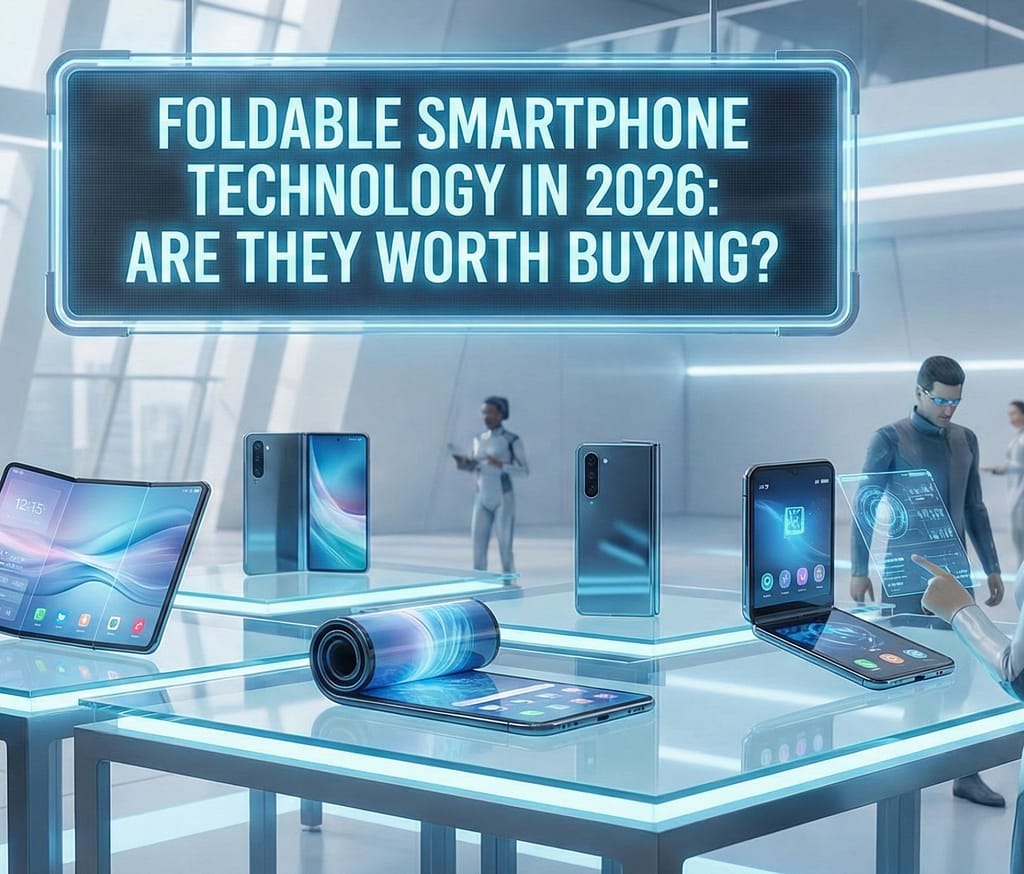

Foldable smartphones were once seen as experimental gadgets, expensive prototypes designed to showcase innovation rather than practicality. However, in 2026, foldable smartphone technology has matured significantly. Major manufacturers are refining designs, improving durability, optimizing software, and lowering prices.
But the big question remains: Are foldable smartphones worth buying in 2026?
Foldable Smartphone Technology in 2026 represents a turning point in mobile innovation. With better hinge mechanisms, stronger flexible displays, improved battery management, and optimized multitasking software, foldable devices are becoming more practical for everyday use.
This in-depth analysis explores how foldable smartphones work, their advantages, limitations, durability concerns, pricing trends, and whether they are a smart investment in 2026.
The Evolution of Foldable Smartphones
The idea of foldable phones emerged from the desire to combine smartphone portability with tablet-level screen size.
Early foldable models faced criticism due to:
- Fragile displays
- Visible crease lines
- Expensive pricing
- Bulky design
- Software compatibility issues
However, continuous innovation has addressed many of these concerns.
By 2026, foldable phones have become thinner, lighter, and more durable. Manufacturers have refined hinge mechanisms and improved flexible OLED technology.
How Foldable Smartphone Technology Works
Foldable smartphones rely on advanced flexible display panels made from ultra-thin glass and layered polymer materials.
Key components include:
- Flexible OLED display
- Multi-layer screen protection
- Advanced hinge system
- Reinforced frame structure
- Optimized UI software
The hinge mechanism allows the device to fold inward or outward while protecting internal components.
Modern foldables undergo extensive folding tests to ensure long-term durability.
Types of Foldable Smartphones in 2026
Foldable phones are generally divided into two main categories:
1. Book-Style Foldables
These devices open like a book, transforming from a regular smartphone into a small tablet.
Benefits:
- Large inner display
- Improved multitasking
- Enhanced productivity
Ideal for:
- Professionals
- Content creators
- Heavy media users
2. Flip-Style Foldables
These fold vertically into compact forms.
Benefits:
- Pocket-friendly size
- Stylish design
- Lightweight structure
Ideal for:
- Casual users
- Fashion-conscious buyers
- Compact phone lovers
Each style targets different user preferences.
Display Technology Improvements in 2026
One of the biggest improvements in Foldable Smartphone Technology in 2026 is display durability.
Advancements include:
- Stronger ultra-thin glass
- Reduced crease visibility
- Better scratch resistance
- Improved brightness levels
- Higher refresh rates
The crease is still present but significantly less noticeable during regular use.
Color accuracy and brightness now match flagship non-foldable smartphones.
Performance and Hardware Advancements
Foldable smartphones now feature flagship-level processors.
Performance improvements include:
- High-end chipsets
- Large RAM capacity
- Advanced cooling systems
- Strong GPU performance
Modern foldables handle gaming, multitasking, and productivity apps smoothly.
The performance gap between foldables and traditional flagships has nearly disappeared.
Software Optimization and Multitasking
Software experience plays a crucial role in foldable usability.
In 2026, operating systems are optimized for:
- Split-screen multitasking
- Drag-and-drop functionality
- App continuity between screens
- Floating windows
When users unfold the device, apps automatically adjust to larger screen layouts.
This improves productivity and entertainment experience.
Camera Quality in Foldable Smartphones
Initially, foldables sacrificed camera quality for design.
However, in 2026:
- Flagship-level camera sensors are integrated
- AI-based photography improves image quality
- Advanced zoom features are included
- Video recording matches premium smartphones
Manufacturers no longer compromise camera performance significantly.
Battery Life and Charging
Battery performance remains one of the challenges for foldable phones due to limited internal space.
However, improvements include:
- Dual battery design
- AI-based battery optimization
- Fast charging support
- Wireless charging
Battery life is now comparable to standard flagship devices for moderate use.
Durability: Are Foldables Strong Enough?
Durability remains a top concern.
Manufacturers have improved:
- Hinge durability cycles
- Dust resistance
- Screen layer reinforcement
- Drop protection
While foldables are stronger than earlier generations, they still require careful handling compared to traditional smartphones.
Protective cases are recommended.
Advantages of Foldable Smartphones in 2026
1. Larger Display Without Losing Portability
Users get tablet-sized screens in pocket-friendly form factors.
2. Enhanced Multitasking
Split-screen usage increases productivity.
3. Unique Design Appeal
Foldables stand out in design and innovation.
4. Improved Media Consumption
Large screens enhance streaming and gaming experiences.
Disadvantages of Foldable Smartphones
1. Higher Price
Foldables remain more expensive than standard smartphones.
2. Slightly Thicker Design
Even with improvements, foldables are still thicker when folded.
3. Long-Term Durability Questions
Although improved, flexible screens may wear over time.
4. App Compatibility Issues
Some apps are not fully optimized for foldable screens.
Pricing Trends in 2026
Prices for foldable smartphones have gradually decreased.
However, they still fall into the premium segment.
In 2026, foldables are more accessible but not yet mainstream budget devices.
As competition increases, pricing may become more competitive in the coming years.
Who Should Buy a Foldable Smartphone?
Foldables are ideal for:
- Business professionals
- Multitaskers
- Content creators
- Early adopters of technology
- Media consumption enthusiasts
They may not be necessary for:
- Basic smartphone users
- Budget-conscious buyers
- Users prioritizing maximum durability
Foldable Smartphones vs Traditional Flagships
Traditional smartphones still offer:
- Strong durability
- Lower pricing
- Simpler design
Foldables offer:
- Larger displays
- Advanced multitasking
- Unique design factor
The decision depends on user priorities.
Market Growth of Foldable Smartphone Technology in 2026
The foldable smartphone market continues to grow steadily.
Manufacturers are investing in:
- Better materials
- Software optimization
- Competitive pricing
- Improved hinge systems
More brands entering the foldable market increases competition and innovation.
Environmental Impact and Sustainability
Foldable phones require complex manufacturing processes.
Manufacturers are focusing on:
- Sustainable materials
- Energy-efficient production
- Repair-friendly designs
Sustainability remains an important factor in smartphone development.
Future of Foldable Smartphones Beyond 2026
The future may include:
- Rollable displays
- Thinner hinge mechanisms
- Fully crease-free screens
- More affordable pricing
- Improved durability standards
Foldables may eventually become mainstream as production costs decrease.
Are Foldable Smartphones Worth Buying in 2026?
The answer depends on your needs.
If you value:
- Larger screen
- Productivity features
- Innovative design
- Multitasking capability
Then foldables are worth considering.
However, if durability and affordability are your main priorities, traditional smartphones may still be the better choice.
Final Verdict
Foldable Smartphone Technology in 2026 has matured significantly compared to earlier generations. While not perfect, foldable devices now offer improved durability, strong performance, competitive camera systems, and optimized software experiences.
They represent the next stage of smartphone innovation but remain a premium product category.
For readers of Digital Technologia, foldable smartphones are no longer experimental — they are practical, innovative devices suited for users who want more than a traditional smartphone.