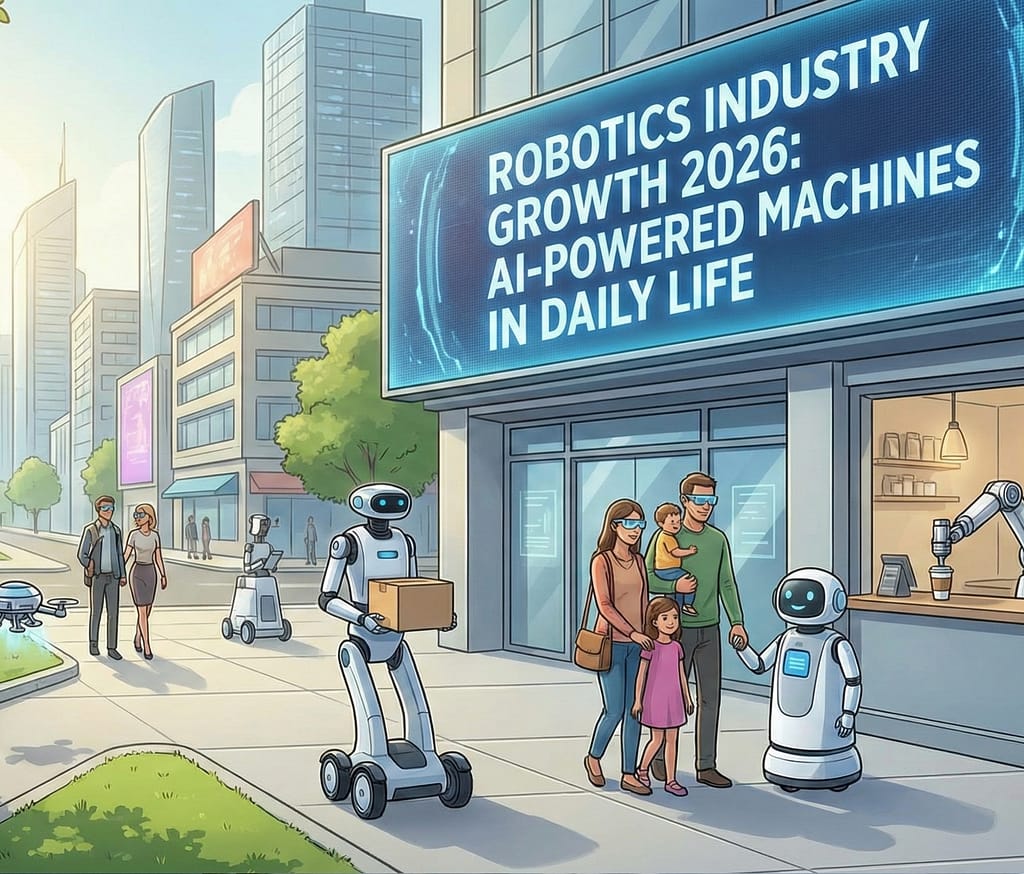

The robotics industry is experiencing one of the fastest growth phases in modern technological history. In 2026, robotics is no longer confined to factory floors or research laboratories. AI-powered machines are entering homes, hospitals, warehouses, farms, retail stores, and even public spaces.
Robotics Industry Growth 2026 represents a turning point where artificial intelligence and automation combine to create machines capable of learning, adapting, and assisting humans in daily life. From delivery robots and surgical assistants to warehouse automation systems and smart home robots, robotics is reshaping how society operates.
This in-depth analysis explores how the robotics industry is growing, the role of artificial intelligence, key sectors adopting robotics, economic impact, challenges, and what the future holds.
The Evolution of Robotics
Robotics has evolved through several stages:
- Early mechanical machines performing repetitive tasks
- Industrial robotic arms in manufacturing
- Programmable automation systems
- AI-driven autonomous robots
In the past, robots operated based on fixed programming. In 2026, robots are increasingly intelligent. They use AI algorithms, computer vision, and machine learning to analyze environments and make decisions in real time.
This shift from static automation to adaptive intelligence defines modern robotics growth.
Artificial Intelligence as the Core Driver
Artificial intelligence is the foundation of robotics innovation in 2026.
AI enables robots to:
- Recognize objects
- Interpret speech
- Navigate complex environments
- Learn from experience
- Adapt to new situations
Machine learning allows robots to improve performance over time without manual reprogramming.
AI-powered robotics represents a major shift from traditional rule-based automation.
Industrial Robotics Expansion
Industrial robotics remains a major segment of the industry.
Manufacturing facilities increasingly rely on:
- Robotic arms
- Automated assembly systems
- Quality inspection robots
- Packaging automation
Robots in factories improve:
- Production speed
- Accuracy
- Worker safety
- Cost efficiency
In 2026, collaborative robots (cobots) are becoming more common. These machines work alongside humans rather than replacing them.
Warehouse and Logistics Automation
The growth of e-commerce has accelerated robotics adoption in logistics.
Warehouses use AI-powered robots for:
- Inventory management
- Package sorting
- Order fulfillment
- Autonomous transport within facilities
Automated logistics systems reduce delivery times and operational costs.
Autonomous delivery robots and drones are also expanding in urban environments.
Healthcare Robotics Revolution
Healthcare is one of the fastest-growing sectors in robotics.
Robotics Industry Growth 2026 includes:
- Surgical robots
- Rehabilitation devices
- AI-powered diagnostic machines
- Patient monitoring robots
- Elderly care assistants
Surgical robots assist doctors with precision procedures. Rehabilitation robots help patients recover mobility.
Healthcare robotics improves patient outcomes and reduces workload for medical professionals.
Robotics in Agriculture
Agricultural robotics is expanding rapidly.
Farm automation systems include:
- Autonomous tractors
- Crop-monitoring drones
- Harvesting robots
- Precision irrigation systems
AI-driven agriculture robots improve crop yield, reduce labor costs, and optimize resource use.
With global food demand rising, agricultural robotics plays a critical role in food security.
Service Robots in Daily Life
Robots are increasingly entering homes and public spaces.
Examples include:
- Smart cleaning robots
- Personal assistant robots
- Hotel service robots
- Restaurant delivery robots
- Retail inventory scanners
These robots improve efficiency and customer experience.
Home robotics in 2026 focuses on convenience, automation, and security.
Robotics in Smart Cities
Smart cities integrate robotics with connected infrastructure.
Applications include:
- Traffic monitoring robots
- Public safety drones
- Infrastructure inspection robots
- Waste management automation
AI-powered urban robots support efficient city management.
Autonomous Vehicles and Robotics
Autonomous vehicles are a major subset of robotics technology.
Self-driving cars, autonomous buses, and delivery robots rely on:
- Computer vision
- AI navigation systems
- Real-time environmental analysis
Robotics and autonomous driving technology share similar AI foundations.
Military and Defense Robotics
Defense sectors are investing in robotic systems for:
- Surveillance
- Logistics support
- Bomb disposal
- Autonomous drones
While controversial, military robotics continues to grow in research and funding.
Robotics and Employment
One major concern is job displacement.
Automation may replace certain repetitive roles. However, robotics growth also creates new jobs in:
- AI development
- Robotics engineering
- Maintenance and repair
- Software programming
- Data analysis
The workforce is shifting toward technical and creative roles.
Economic Impact of Robotics Industry Growth 2026
The global robotics market continues expanding rapidly.
Industries investing heavily in robotics include:
- Manufacturing
- Healthcare
- Agriculture
- Retail
- Logistics
- Defense
Investment in robotics startups is increasing as demand for automation rises.
Robotics contributes significantly to productivity and economic growth.
Challenges Facing Robotics Development
Despite growth, several challenges exist:
- High development costs
- Ethical concerns
- Safety regulations
- AI bias issues
- Cybersecurity vulnerabilities
Robots connected to networks must be protected against hacking.
Governments are working to establish regulations and safety standards.
Human-Robot Collaboration
Modern robotics emphasizes collaboration rather than replacement.
Cobots are designed to:
- Assist workers
- Improve productivity
- Enhance safety
Human oversight remains essential in many industries.
The goal is augmentation, not elimination.
Robotics and Artificial General Intelligence
Future robotics development may involve advanced AI systems capable of broader reasoning.
While current robots operate within specific tasks, research is ongoing in more adaptable intelligence systems.
This could redefine robotics capabilities beyond 2026.
Sustainability and Environmental Impact
Robotics can support sustainability by:
- Reducing waste in manufacturing
- Improving energy efficiency
- Monitoring environmental conditions
- Supporting renewable energy infrastructure
Automation may contribute to more sustainable industrial practices.
Future Outlook Beyond 2026
Future robotics trends may include:
- More affordable personal robots
- Advanced humanoid robots
- AI-driven emotional recognition
- Autonomous construction robots
- Space exploration robotics
As AI capabilities expand, robotics applications will diversify.
Are AI-Powered Machines Becoming Essential?
In 2026, robotics is no longer experimental. AI-powered machines are becoming essential components of modern infrastructure.
From smart homes to advanced hospitals and automated factories, robotics integration is accelerating.
While challenges remain, the industry’s growth trajectory indicates long-term expansion.
Conclusion
Robotics Industry Growth 2026 highlights the increasing presence of AI-powered machines in daily life. Automation is transforming manufacturing, healthcare, agriculture, logistics, and urban management.
Artificial intelligence remains the core driver behind robotics advancement, enabling machines to adapt and operate intelligently.
Although ethical and regulatory concerns persist, robotics is shaping the future of work, productivity, and digital innovation.
For readers of Digital Technologia, understanding robotics growth is essential to staying informed about the next phase of technological transformation.