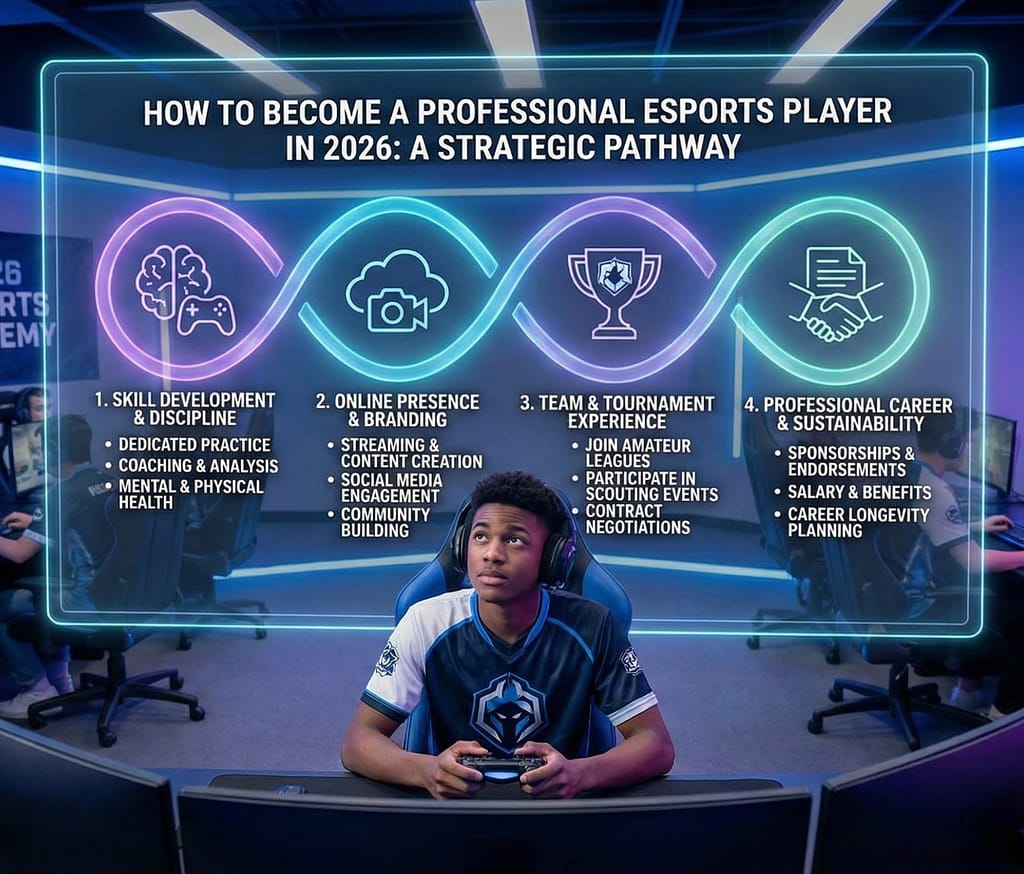

Esports is no longer just a hobby or a weekend competition. In 2026, competitive gaming has evolved into a structured global industry with professional teams, sponsorship contracts, training facilities, coaching staff, and international tournaments with massive prize pools.
Many young gamers now dream of turning their gaming passion into a full-time career. But becoming a professional esports player is not as simple as playing games all day. It requires discipline, strategy, consistency, mental strength, and long-term commitment.
This complete guide explains how to become a professional esports player in 2026, including training methods, tournament pathways, skill development, branding, and realistic expectations.
Understanding the Esports Industry in 2026
Before starting your journey, you must understand what “professional” actually means.
A professional esports player:
- Competes in official tournaments
- Is signed to a recognized team or organization
- Earns income through salary, prize money, or sponsorships
- Follows structured training schedules
Popular competitive titles include:
- Valorant
- League of Legends
- Call of Duty: Warzone
- PUBG: Battlegrounds
Each game has its own competitive ecosystem, tournaments, and ranking system.
Step 1: Choose One Competitive Game
If you want to go pro, you must specialize.
Many beginners make the mistake of playing multiple games casually. Professional esports players focus on one main title and master every detail.
When choosing a game:
- Pick a game with a strong competitive scene
- Check if it has regular tournaments
- Ensure you genuinely enjoy playing it
Long-term commitment is essential.
Step 2: Master Game Mechanics and Strategy
Becoming a professional esports player in 2026 requires elite-level gameplay.
Focus on:
- Aim accuracy
- Reaction time
- Map awareness
- Strategy adaptation
- Team communication
Daily practice should include:
- Aim training drills
- Watching professional matches
- Reviewing your own gameplay
- Identifying mistakes
Improvement comes from intentional practice, not random gameplay.
Step 3: Develop a Professional Practice Routine
Professional players treat gaming like a job.
A proper routine may include:
- 4–6 hours of structured training
- Scrimmage matches with teams
- Replay analysis
- Strategy discussions
Avoid burnout by scheduling breaks.
Quality training is more important than long hours.
Step 4: Improve Mental Strength
Esports is highly competitive and mentally demanding.
You must learn to:
- Stay calm under pressure
- Handle losses positively
- Avoid toxic behavior
- Maintain focus during intense matches
Mental resilience separates amateur players from professionals.
Some professional teams even hire sports psychologists.
Step 5: Invest in Proper Gaming Equipment
While skill is the most important factor, good equipment helps you perform consistently.
Essential tools include:
- High-refresh-rate monitor (144Hz or above)
- Low-latency gaming mouse or controller
- Stable high-speed internet
- Comfortable gaming chair and desk setup
Your setup should support long practice sessions without discomfort.
Step 6: Climb Ranked Leaderboards
Ranked mode performance is your first proof of skill.
To get noticed:
- Reach high ranks consistently
- Maintain strong win rates
- Perform well in competitive lobbies
Top-ranked players often attract attention from teams and recruiters.
Step 7: Participate in Online Tournaments
You cannot become professional without competition experience.
Start with:
- Community tournaments
- Local esports events
- Online qualifiers
Winning small tournaments builds credibility.
Tournament experience teaches pressure management.
Step 8: Join or Create a Competitive Team
Most esports games are team-based.
You need:
- Reliable teammates
- Strong communication
- Coordinated strategies
You can:
- Join amateur teams
- Participate in team tryouts
- Form your own competitive squad
Team synergy matters as much as individual skill.
Step 9: Build an Online Presence
In 2026, branding plays a big role in esports careers.
Many players grow their visibility through platforms like:
- Twitch
- YouTube
Posting highlights, streaming practice sessions, and sharing insights helps attract:
- Fans
- Sponsors
- Team scouts
A strong online presence increases opportunities.
Step 10: Get Scouted by Esports Organizations
Professional teams look for:
- High-ranked players
- Tournament consistency
- Positive attitude
- Teamwork ability
Scouting happens through:
- Online tournaments
- Ranked leaderboards
- Social media visibility
Persistence is key.
Step 11: Maintain Physical Health
Many underestimate physical fitness in esports.
Healthy habits improve:
- Focus
- Reaction time
- Endurance
Important habits include:
- Regular exercise
- Balanced diet
- Good sleep schedule
Professional teams encourage healthy lifestyles.
Income Sources for Professional Esports Players
Income in 2026 comes from:
- Team salary
- Tournament prize pools
- Sponsorship deals
- Streaming revenue
Top players earn significantly, but beginners may start with smaller income.
Financial stability takes time.
Common Mistakes to Avoid
If you want to succeed:
- Avoid toxic behavior
- Do not neglect education completely
- Do not overtrain without rest
- Do not switch games frequently
Consistency and professionalism matter.
Challenges in the Esports Career Path
Becoming a professional esports player is difficult because:
- Competition is intense
- Only limited team slots exist
- Performance pressure is high
- Income can be unstable
Many talented players never reach top-tier levels.
Hard work increases chances, but success is never guaranteed.
Alternative Careers in Esports
If pro gameplay doesn’t work out, you can explore:
- Coaching
- Analyst roles
- Content creation
- Tournament management
- Esports journalism
The esports ecosystem offers multiple career paths.
Is Becoming a Professional Esports Player Worth It?
It depends on:
- Your passion
- Your discipline
- Your willingness to sacrifice
- Your long-term goals
If you love competitive gaming and are ready to train seriously, esports can become a rewarding career.
However, always have a backup plan.
Final Thoughts
How to Become a Professional Esports Player in 2026 is not about shortcuts. It requires consistent training, competitive experience, mental strength, and personal branding. The esports industry continues to grow, offering real career opportunities — but only for those willing to treat gaming like a profession.
Success comes from discipline, teamwork, and long-term dedication.
For readers of Digital Technologia, the path to becoming a pro gamer starts today — with focused practice and a clear strategy.