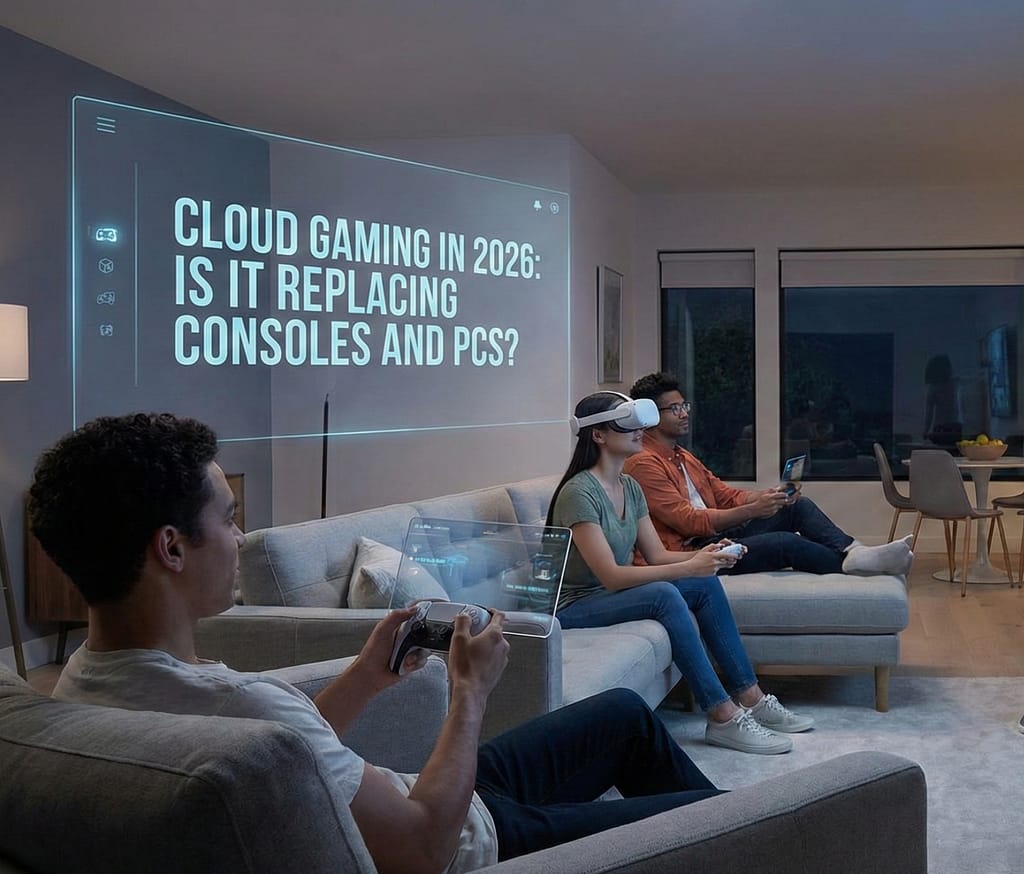

The gaming industry has transformed dramatically over the past decade, but 2026 marks a critical turning point in how games are delivered and played. Instead of installing large files or buying expensive hardware, players can now stream high-quality games directly from the cloud. This shift has sparked a major debate: Is cloud gaming replacing consoles and PCs?
Cloud Gaming in 2026 is no longer experimental. It has matured into a competitive alternative to traditional gaming platforms. With faster internet speeds, improved data centers, and advanced streaming technology, cloud gaming services are expanding globally.
This in-depth article explores how cloud gaming works, its advantages and limitations, how it compares to consoles and PCs, market growth trends, and whether it truly represents the future of gaming.
What Is Cloud Gaming?
Cloud gaming allows players to stream video games from remote servers instead of running them locally on their devices.
Instead of:
- Installing the game
- Using a powerful GPU
- Upgrading hardware
The game runs on powerful cloud servers, and the player receives a live video stream of the gameplay.
Input commands (keyboard, mouse, controller) are sent to the server, processed instantly, and streamed back.
This removes the need for high-end gaming hardware.
Major Cloud Gaming Platforms in 2026
Several major companies dominate the cloud gaming space.
1. NVIDIA GeForce NOW
Allows players to stream games they already own from digital stores.
Known for:
- High performance
- Good latency control
- Strong PC game support
2. Microsoft Xbox Cloud Gaming
Integrated into the Xbox ecosystem.
Offers:
- Subscription-based access
- Cross-device compatibility
- Strong game library
3. Sony PlayStation Cloud Streaming
Part of the PlayStation subscription model.
Supports:
- Console-quality streaming
- Popular exclusive titles
Cloud gaming services are expanding rapidly in 2026.
Why Cloud Gaming Is Growing in 2026
Several factors drive growth.
1. Faster Internet Speeds
Widespread adoption of:
- 5G networks
- Fiber broadband
- Low-latency infrastructure
makes cloud gaming more stable.
2. Rising Hardware Costs
Gaming PCs and consoles are expensive.
Cloud gaming removes the need for:
- High-end GPUs
- Large storage space
- Frequent upgrades
3. Cross-Platform Access
Players can stream games on:
- Smartphones
- Tablets
- Smart TVs
- Low-end laptops
Accessibility is a major advantage.
Advantages of Cloud Gaming
1. No Expensive Hardware Required
Cloud servers handle processing power.
Players only need:
- Stable internet
- Compatible device
2. Instant Access to Games
No downloads or updates.
Games launch instantly from the cloud.
3. Lower Entry Barrier
New players can access high-end gaming without investing in hardware.
4. Automatic Updates
All updates happen server-side.
No patch downloads required.
Limitations of Cloud Gaming in 2026
Despite improvements, challenges remain.
1. Internet Dependency
Cloud gaming requires stable high-speed internet.
Poor connectivity leads to:
- Lag
- Input delay
- Video compression artifacts
2. Latency Issues
Competitive gamers are sensitive to even small delays.
Fast-paced games require near-instant input response.
3. Data Usage
Streaming high-resolution games consumes significant data.
Limited data plans may restrict usage.
4. Limited Ownership
Cloud gaming often relies on subscriptions.
Players may not permanently own games.
Cloud Gaming vs Console Gaming
Console Advantages
- Stable performance
- No internet dependency for offline games
- Strong exclusive titles
Cloud Gaming Advantages
- No hardware purchase
- Cross-device access
- Easy setup
In 2026, consoles still offer more consistent performance for offline gaming.
Cloud Gaming vs Gaming PCs
PC Advantages
- Highest graphics customization
- Mod support
- Competitive esports performance
Cloud Gaming Advantages
- No expensive GPU
- No maintenance
- Lower cost entry
Hardcore competitive players still prefer local PCs.
Esports and Competitive Gaming
Esports requires:
- Ultra-low latency
- Stable frame rates
- Zero connection interruptions
Cloud gaming in 2026 is improving but not yet ideal for professional esports tournaments.
Professional competitions still rely on local hardware.
Mobile Cloud Gaming Growth
Mobile devices benefit significantly.
Players can stream AAA games on smartphones without powerful chips.
This expands access in emerging markets.
Business Model of Cloud Gaming
Most cloud gaming services operate on:
- Subscription models
- Tier-based access
- Library access plans
Recurring subscriptions create predictable revenue.
Is Cloud Gaming Replacing Consoles and PCs?
In 2026, cloud gaming is not fully replacing traditional hardware.
Instead, it is:
- Complementing consoles
- Supporting casual gamers
- Expanding access
Consoles and PCs still dominate competitive and high-performance segments.
Market Growth Outlook
Cloud gaming continues expanding due to:
- Improved infrastructure
- Expanding subscription models
- Corporate investment
Market analysts predict continued growth beyond 2026.
Future of Cloud Gaming
Future advancements may include:
- Lower latency networks
- AI-based video compression
- Edge computing infrastructure
- 6G integration
These developments could further reduce performance gaps.
Who Should Choose Cloud Gaming?
Cloud gaming is ideal for:
- Casual gamers
- Travelers
- Budget-conscious players
- Mobile-first users
Hardcore esports players may still prefer local hardware.
Final Verdict
Cloud Gaming in 2026 has matured into a strong alternative to traditional gaming systems. It reduces hardware costs, expands accessibility, and simplifies game access. However, it still faces limitations related to latency, internet dependency, and data usage.
Consoles and gaming PCs remain dominant for competitive and offline experiences. Instead of replacing them entirely, cloud gaming is becoming an additional layer in the gaming ecosystem.
The future likely involves coexistence rather than replacement.
For readers of Digital Technologia, understanding cloud gaming trends is essential to staying ahead in the evolving gaming industry.