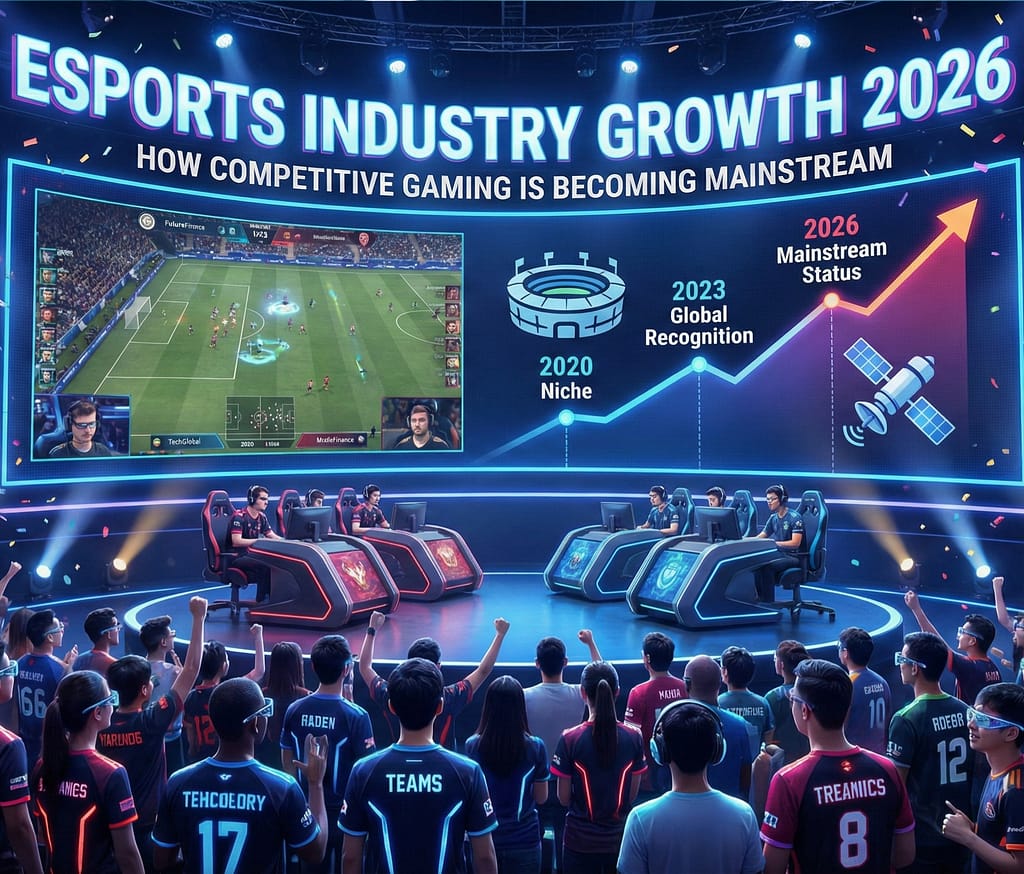

The global gaming landscape has transformed dramatically over the past decade, but 2026 marks a defining moment in the rise of competitive gaming. What was once considered a niche hobby has evolved into a billion-dollar global ecosystem. Esports Industry Growth 2026 reflects the rapid mainstream acceptance of competitive gaming across entertainment, education, sponsorship, and media industries.
Esports is no longer limited to small online tournaments. It now includes professional leagues, global championships, university programs, corporate sponsorships, streaming platforms, and massive live audiences. Competitive gaming is increasingly viewed as a legitimate career path and entertainment category.
This in-depth article explores how esports has grown into a mainstream industry in 2026, the driving factors behind its expansion, revenue models, regional growth, challenges, and future outlook.
What Is Esports?
Esports, short for electronic sports, refers to organized competitive video gaming. Professional players compete individually or in teams across popular game genres such as:
- Battle Royale
- First-person shooters
- Multiplayer online battle arenas (MOBA)
- Sports simulations
- Strategy games
Tournaments are broadcast online and sometimes in stadium venues, attracting millions of viewers worldwide.
In 2026, esports is recognized as a structured entertainment sector rather than just online gaming.
The Scale of Esports Industry Growth 2026
The esports industry continues to expand in both revenue and audience reach.
Key growth indicators include:
- Increased global viewership
- Larger tournament prize pools
- Growing sponsorship investments
- Expansion of collegiate esports programs
- Entry of traditional sports organizations
Esports tournaments now rival traditional sports events in terms of online viewership and digital engagement.
Major Drivers Behind Esports Growth
1. Streaming Platforms and Digital Media
Live streaming has revolutionized esports accessibility.
Platforms allow fans to:
- Watch live tournaments
- Interact with streamers
- Follow professional players
- Engage with esports communities
Streaming revenue contributes significantly to the esports ecosystem.
2. Corporate Sponsorships and Brand Partnerships
Brands increasingly invest in esports sponsorships.
Companies partner with:
- Professional teams
- Tournament organizers
- Influencers
- Gaming hardware brands
Sponsorship deals fund tournaments and support team development.
3. Youth Demographics and Digital Culture
Esports appeals strongly to younger audiences.
Unlike traditional sports, esports is native to digital culture. Younger generations prefer:
- Online entertainment
- Interactive content
- Digital communities
This demographic shift strengthens long-term industry growth.
4. Mobile Gaming Expansion
Mobile gaming has played a major role in expanding competitive gaming access.
In many regions, smartphones are more accessible than gaming PCs.
Mobile esports titles attract millions of players and viewers, especially in emerging markets.
Regional Esports Growth in 2026
Asia
Asia remains a dominant esports market.
Countries invest heavily in:
- Professional leagues
- Training facilities
- Youth development programs
Esports has cultural acceptance and strong fan bases.
North America
North America focuses on:
- Franchise-based leagues
- College esports programs
- Corporate sponsorship integration
Esports infrastructure is well-developed.
Europe
European esports emphasizes:
- Regional leagues
- International tournament participation
- Cross-border competitions
Europe continues contributing to global championship events.
Emerging Markets
Regions in South Asia, Latin America, and the Middle East are experiencing rapid growth.
Improved internet connectivity and mobile gaming expansion are major contributors.
Revenue Streams in Esports Industry Growth 2026
Esports generates revenue through multiple channels.
1. Sponsorship and Advertising
Brands pay for:
- Team logos
- Event placements
- Digital advertisements
Sponsorship remains the largest revenue source.
2. Media Rights
Streaming and broadcasting rights generate income.
Media platforms compete for exclusive tournament coverage.
3. Merchandise Sales
Teams sell:
- Jerseys
- Accessories
- Limited-edition items
Fan engagement strengthens merchandise demand.
4. Ticket Sales
Live tournaments in arenas generate ticket revenue.
Large championship events attract thousands of spectators.
5. In-Game Purchases and Event Integration
Game developers integrate esports events into their titles.
Special event-themed skins and digital items support tournaments.
Professionalization of Esports
In 2026, esports teams operate like professional sports organizations.
They include:
- Coaches
- Analysts
- Fitness trainers
- Psychologists
- Marketing managers
Player contracts, transfer agreements, and sponsorship deals mirror traditional sports models.
Esports in Education
Colleges and universities now offer:
- Esports scholarships
- Competitive leagues
- Game design programs
Educational institutions recognize esports as a legitimate discipline.
This contributes to long-term mainstream acceptance.
Technology Advancements Supporting Esports
Technological innovation enhances competitive gaming.
Key advancements include:
- Low-latency internet
- High-refresh-rate displays
- Advanced gaming hardware
- AI-driven performance analytics
Stable connectivity is critical for fair competition.
Challenges Facing the Esports Industry
Despite rapid growth, challenges remain.
1. Regulatory Issues
Different countries have varying regulations regarding:
- Prize money taxation
- Player contracts
- Online gaming restrictions
Regulatory clarity is needed.
2. Player Burnout
Professional esports careers can be demanding.
Long training hours and mental pressure impact player well-being.
Teams now prioritize mental health support.
3. Monetization Sustainability
Not all esports leagues are profitable.
Long-term sustainability depends on stable revenue models.
4. Competitive Game Lifespan
Esports titles can lose popularity over time.
Developers must maintain game balance and community interest.
Esports vs Traditional Sports
In 2026, esports is increasingly compared with traditional sports.
Similarities include:
- Professional leagues
- Sponsorship deals
- Global tournaments
- Fan communities
Differences include:
- Digital-first engagement
- Lower physical barriers to entry
- Faster game evolution cycles
Esports complements traditional sports rather than replacing them.
Career Opportunities in Esports
Esports growth creates diverse career paths:
- Professional player
- Streamer
- Coach
- Tournament organizer
- Content creator
- Esports journalist
- Data analyst
The industry extends beyond gameplay.
Economic Impact of Esports Industry Growth 2026
The esports sector contributes to:
- Job creation
- Digital infrastructure investment
- Technology innovation
- Youth engagement
Cities hosting major tournaments benefit economically.
Future Outlook Beyond 2026
Future trends may include:
- Deeper integration of VR and AR
- AI-enhanced training tools
- Global franchise expansion
- Cross-platform competitions
Esports is expected to continue mainstream expansion.
Conclusion
Esports Industry Growth 2026 demonstrates that competitive gaming is no longer a niche hobby. It has become a structured, professional, and globally recognized entertainment sector. Driven by streaming platforms, sponsorship investment, mobile gaming expansion, and technological innovation, esports continues to integrate into mainstream culture.
While challenges remain, the industry’s growth trajectory suggests long-term sustainability and increasing global influence.
For readers of Digital Technologia, esports represents not only entertainment but also a rapidly evolving digital economy shaping the future of interactive media.