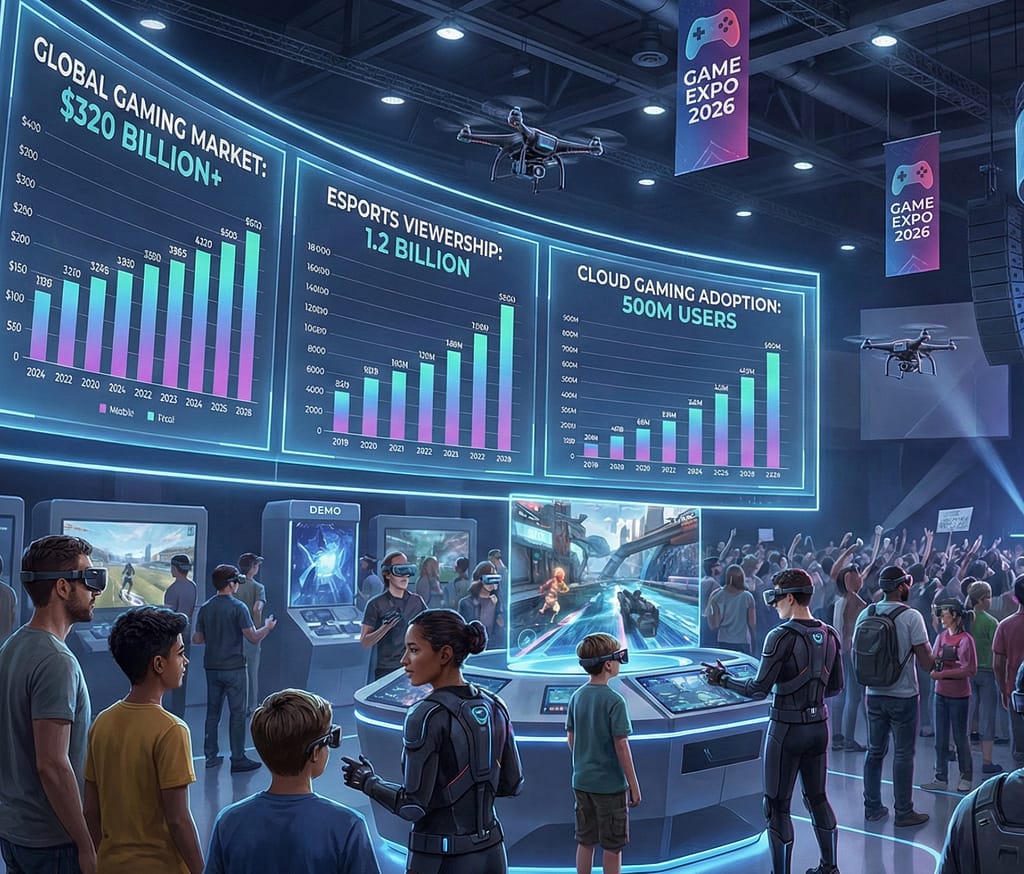

The global gaming industry has transformed from a niche entertainment sector into one of the largest and fastest-growing industries in the world. In 2026, gaming is no longer just a hobby — it is a multi-billion-dollar ecosystem that combines technology, entertainment, esports, streaming, and digital economies.
From mobile gaming in developing countries to advanced console gaming in major markets, the industry continues to expand at an unprecedented pace. This article explores how the gaming industry is growing in 2026, what is driving this growth, and what the future holds for gamers and developers.
The Size of the Gaming Industry in 2026
The gaming industry has crossed hundreds of billions of dollars in global revenue. It now competes directly with the film and music industries combined.
Several factors contribute to this massive expansion:
- Widespread smartphone adoption
- Affordable internet access
- Growth of esports
- Digital game distribution platforms
- In-game purchases and microtransactions
Gaming is no longer limited to consoles and PCs. It is available to anyone with a smartphone and internet connection.
The Rise of Mobile Gaming
One of the biggest contributors to industry growth is mobile gaming.
Smartphones have become powerful enough to support high-quality graphics and multiplayer experiences. In 2026, mobile gaming accounts for a significant portion of global gaming revenue.
Why mobile gaming is growing:
- Easy accessibility
- Free-to-play business models
- Short, engaging gameplay sessions
- Social features and online multiplayer modes
Countries like India, Brazil, and Southeast Asian nations have seen explosive mobile gaming growth due to increasing smartphone penetration.
Console and PC Gaming Evolution
While mobile gaming dominates in numbers, console and PC gaming continue to grow in revenue and innovation.
Modern consoles now offer:
- Realistic graphics
- High frame rates
- Cloud integration
- Digital-only game libraries
PC gaming has also expanded with advanced graphics cards and high-performance systems supporting immersive gaming experiences.
Subscription services and digital downloads have replaced traditional physical game sales in many regions.
The Expansion of Esports
Esports has become a major growth driver in 2026.
Competitive gaming tournaments now attract millions of viewers worldwide. Professional players earn sponsorship deals, tournament prizes, and streaming revenue.
Esports growth is fueled by:
- Live streaming platforms
- Online multiplayer games
- Global tournaments
- Brand sponsorships
Colleges and universities even offer esports scholarships, turning gaming into a recognized professional career path.
Cloud Gaming and Streaming Services
Cloud gaming is changing how games are played.
Instead of downloading heavy game files, players can stream games directly from servers. This reduces hardware requirements and makes high-quality gaming accessible to more users.
Benefits of cloud gaming:
- No need for expensive hardware
- Instant access to large game libraries
- Cross-device compatibility
Although internet speed remains a factor, cloud gaming adoption continues to grow steadily.
Virtual Reality (VR) and Augmented Reality (AR)
Immersive gaming technologies are contributing to industry growth.
Virtual reality allows players to experience games in fully immersive 3D environments. Augmented reality blends digital elements with the real world.
As hardware becomes more affordable, VR and AR gaming adoption increases.
These technologies are particularly popular in:
- Simulation games
- Adventure games
- Fitness-based games
- Educational gaming experiences
The Role of Artificial Intelligence in Gaming
AI is transforming the gaming experience.
In 2026, AI is used for:
- Realistic non-player character (NPC) behavior
- Personalized gameplay experiences
- Adaptive difficulty levels
- Anti-cheat systems
AI makes games more interactive and intelligent, improving player engagement.
Growth of In-Game Economies
Modern games have developed complex digital economies.
Players purchase:
- Skins
- Weapons
- Battle passes
- Virtual currencies
Microtransactions and digital purchases have become major revenue sources for developers.
Some games even support player-driven marketplaces, where digital items are traded.
Social and Community-Driven Gaming
Gaming is no longer a solo activity.
Multiplayer platforms allow players to:
- Form teams
- Communicate in real-time
- Compete globally
- Stream gameplay
Online communities strengthen player loyalty and increase long-term engagement.
Streaming and content creation have also become part of gaming culture, creating new income opportunities for gamers.
Gaming in Emerging Markets
Developing countries are becoming major gaming markets.
Improved internet infrastructure and affordable smartphones have made gaming accessible to millions of new users.
Emerging markets are expected to drive the next wave of global gaming growth.
Local game developers are also creating culturally relevant games tailored to regional audiences.
Challenges Facing the Gaming Industry
Despite rapid growth, the industry faces several challenges:
- Data privacy concerns
- Online toxicity and harassment
- Addiction issues
- Regulatory pressures
- Monetization criticism
Governments and companies are working to balance growth with responsible gaming practices.
Career Opportunities in the Gaming Industry
The growth of gaming has created new career paths, including:
- Game development
- Graphic design
- Game testing
- Esports management
- Content creation
- Game marketing
The industry offers opportunities beyond just playing games.
Future Outlook of the Gaming Industry
The future of gaming looks strong and innovative.
Expected trends include:
- More immersive virtual environments
- Better AI integration
- Cross-platform gaming
- Expansion of cloud gaming
- Stronger esports ecosystems
Gaming is evolving into a blend of technology, entertainment, and digital interaction.
Conclusion
The gaming industry in 2026 is stronger than ever. With advancements in mobile gaming, cloud streaming, AI integration, and esports expansion, the market continues to grow rapidly.
Gaming has become a global digital ecosystem connecting millions of players worldwide. As technology continues to advance, the industry will likely expand even further, offering new opportunities for developers, investors, and gamers alike.
For readers of Digital Technologia, the gaming industry represents not just entertainment, but a major technological and economic force shaping the future.