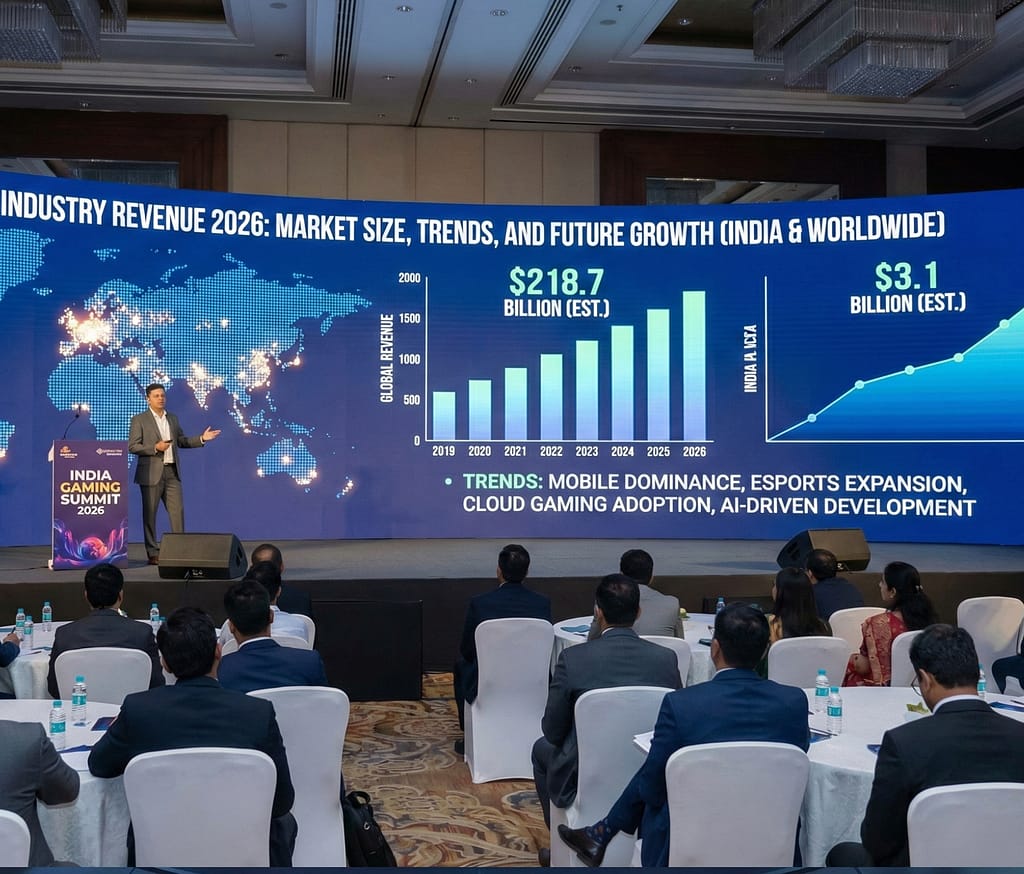

The gaming industry in 2026 has evolved into one of the largest digital entertainment economies in the world. Once considered a niche hobby, gaming now represents a global market that rivals and often surpasses film, music, and television industries in annual revenue.
Gaming Industry Revenue 2026 reflects strong expansion across mobile gaming, console platforms, PC ecosystems, esports tournaments, subscription models, and cloud gaming services. With billions of active users worldwide and rapid technological innovation, the gaming sector continues to show long-term growth potential.
This detailed report analyzes global and Indian gaming revenue trends, platform breakdown, revenue models, esports contribution, technology impact, and future projections.
Global Gaming Industry Revenue 2026
The global gaming market in 2026 is valued in the hundreds of billions of dollars annually. Growth has been driven primarily by mobile gaming, recurring subscription services, and in-game monetization.
Global Revenue by Platform (Estimated Share 2026)
| Platform Segment | Estimated Revenue Share | Growth Trend |
|---|---|---|
| Mobile Gaming | 50–55% | High Growth |
| Console Gaming | 25–30% | Stable Growth |
| PC Gaming | 15–20% | Moderate Growth |
| Cloud & Subscription | Increasing Segment | Rapid Growth |
Mobile gaming remains the dominant revenue driver globally.
Mobile Gaming Revenue Dominance
Mobile gaming accounts for the largest portion of industry revenue due to:
- Affordable smartphone access
- Free-to-play models
- Microtransactions
- Expanding 5G networks
Popular competitive and multiplayer titles such as PUBG: Battlegrounds and Call of Duty: Mobile generate revenue through battle passes, skins, and seasonal content.
Mobile-first markets such as India and Southeast Asia significantly contribute to global revenue growth.
Console Gaming Revenue in 2026
Console platforms continue to generate strong income, especially in developed markets.
Major companies include:
- Sony
- Microsoft
Console revenue comes from:
- Hardware sales
- Exclusive titles
- Subscription services
- Digital downloads
Although growth is slower than mobile, consoles remain profitable due to ecosystem loyalty.
PC Gaming Revenue and Esports Contribution
PC gaming continues to dominate competitive esports.
Esports-driven titles such as League of Legends and Valorant generate revenue through digital sales and in-game purchases.
PC Gaming Revenue Drivers
| Revenue Source | Contribution Level |
|---|---|
| Digital Game Sales | High |
| In-Game Purchases | High |
| Esports Ecosystem | Growing |
| Hardware Upgrades | Moderate |
PC gaming remains strong among competitive and high-performance players.
Gaming Industry Revenue 2026 in India
India is one of the fastest-growing gaming markets globally.
Key growth drivers:
- Youth population dominance
- Affordable data plans
- Smartphone penetration
- UPI digital payments
India’s gaming market is largely mobile-driven.
Indian Gaming Market Breakdown
| Segment | Market Dominance in India |
|---|---|
| Mobile Gaming | Very High |
| PC Gaming | Moderate |
| Console Gaming | Limited but Growing |
| Esports | Rapid Growth |
Mobile gaming accounts for the majority of revenue in India.
Revenue Streams in Gaming Industry 2026
The gaming industry operates through diversified revenue models.
1. Microtransactions (Primary Revenue Source)
Free-to-play games earn revenue via:
- Cosmetic items
- Skins
- Battle passes
- Event-based content
Microtransactions account for the largest global revenue share.
2. Subscription-Based Models
Subscription services provide:
- Access to game libraries
- Cloud streaming
- Online multiplayer access
Recurring monthly revenue increases financial stability.
3. Advertising Revenue
Mobile games generate income through:
- Reward-based ads
- Banner placements
- Sponsored events
This model is highly effective in emerging markets.
4. Esports and Tournament Revenue
Esports contributes through:
- Sponsorship deals
- Streaming rights
- Event ticket sales
- Merchandise
Esports revenue continues expanding annually.
Technology Trends Impacting Revenue Growth
Artificial Intelligence
AI improves:
- Player personalization
- Anti-cheat systems
- Dynamic content updates
AI increases player retention.
Cloud Gaming Expansion
Cloud gaming reduces hardware dependency and supports subscription growth.
Cloud adoption is expected to grow steadily.
5G and Infrastructure
Faster connectivity improves:
- Online multiplayer experience
- Competitive esports
- Mobile streaming stability
Infrastructure directly supports revenue growth.
Comparison: Global vs India Market Growth
| Factor | Global Market | India Market |
|---|---|---|
| Mobile Dominance | High | Extremely High |
| Console Revenue | Strong | Limited |
| PC Competitive Scene | Strong | Growing |
| Esports Investment | Mature | Rapidly Expanding |
| Subscription Adoption | Increasing | Emerging |
India represents one of the highest growth-potential markets in 2026.
Challenges Facing the Gaming Industry
Despite strong revenue growth, challenges include:
- Regulatory policies
- Data privacy concerns
- Monetization controversies
- Gaming addiction debates
Governments globally are increasing oversight.
Future Growth Outlook Beyond 2026
Gaming revenue is expected to grow due to:
- AI-driven personalization
- Cross-platform ecosystems
- Cloud expansion
- Growth in emerging markets
India is projected to remain a key expansion region.
Final Conclusion
Gaming Industry Revenue 2026 confirms that gaming is one of the most powerful sectors in the global digital economy. Mobile gaming dominates revenue globally and especially in India. Console and PC ecosystems remain strong in developed markets, while esports and subscription models continue expanding.
India’s rapid smartphone adoption and youth-driven market position it as one of the fastest-growing gaming economies worldwide.
The future of gaming revenue will be shaped by technology, digital payments, AI integration, and expanding internet infrastructure.